🎉 Up to 70% Off Selected ItemsShop Sale
HomeStore

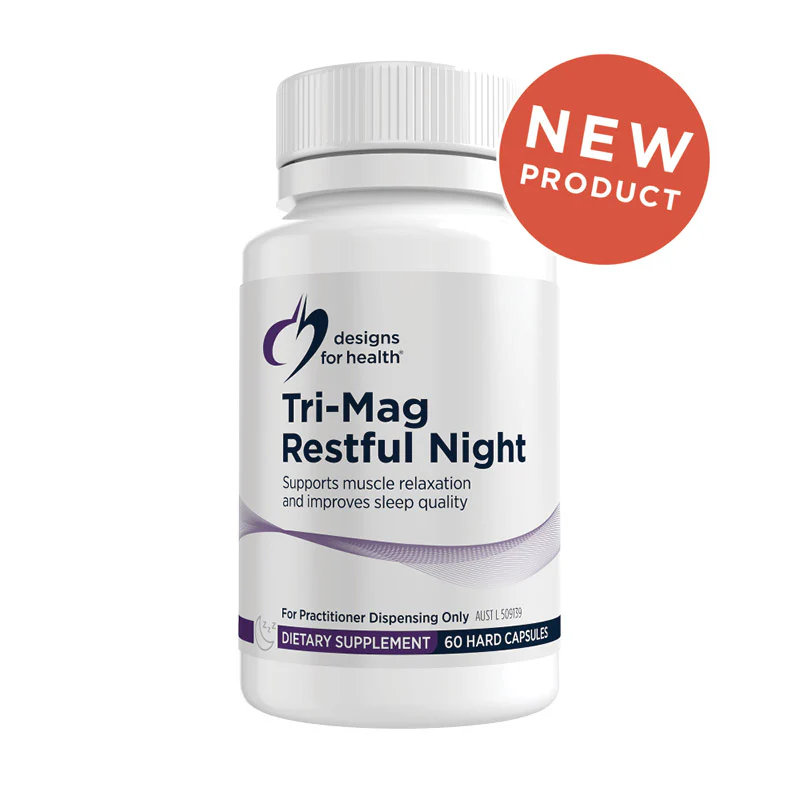
Designs for Health Tri-Mag Restful Night Capsules

Product image 1
Product image 2

Designs for Health Tri-Mag Restful Night Capsules

Magnesium

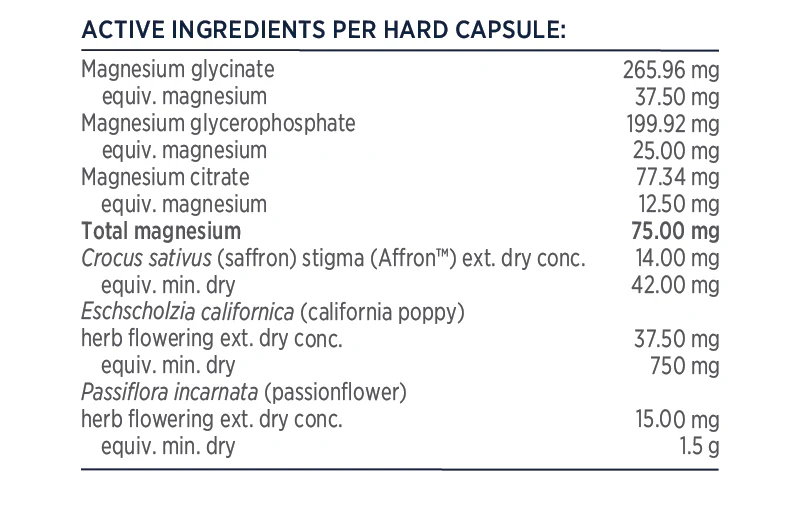
Magnesium is an essential mineral required for hundreds of enzymatic reactions that underpin key physiological processes. More than 600 enzymes rely on magnesium as a co-factor, with a further 200 directly activated by it. It plays a foundational role in cellular energy production (ATP synthesis) and in the normal function of muscle and nerve tissue. Dietary magnesium insufficiency is common in many populations, particularly where intake of whole grains, legumes, nuts, and seeds is low. Adequate magnesium intake helps maintain muscle health and function and can help relieve muscle cramps when dietary intake is inadequate.  

Skeletal Muscle Function

Magnesium is a critical regulator of the sodium–potassium ATPase (Na+/K+-ATPase) pump, which removes sodium from the cell in exchange for potassium. This activity is essential for maintaining the electrical potential of skeletal muscle membranes and enabling coordinated contraction and relaxation cycles.   In addition to its role in membrane excitability, magnesium supports muscle energy metabolism by facilitating oxygen utilisation and ATP production. These mechanisms help explain its well-established role in supporting healthy muscle contraction and relaxation.  

Absorption & Bioavailability

Magnesium absorption primarily occurs in the small intestine and is influenced by factors such as solubility, gastric pH, hydration shell formation, and specific transport mechanisms. Absorption efficiency is typically around 30– 50%, depending on dose and form. Organic forms, including citrates, glycinates, glycerophosphates, and other amino acid chelates, are known to exhibit favourable solubility and bioavailability profiles compared with inorganic salts. These characteristics make them well-suited for use in oral supplementation where optimal absorption is desired.  

Saffron

Saffron (Crocus sativus) is a traditional herbal medicine with a long history of use. Across more than 3,500 years of cultivation, ancient civilisations — including Persia, Greece, Egypt, India, Mesopotamia, and Rome — valued saffron for its vibrant colouring, distinctive flavour, aromatic qualities, and medicinal use. Its key bioactive constituents — crocin, picrocrocin, and safranal, collectively known as Lepticrosalides — are considered central to its activity Saffron has been extensively studied in clinical settings for its role in supporting sleep quality and mood balance. Affron®, a standardised saffron extract containing 3.5% Lepticrosalides, is supported by multiple human clinical studies investigating its effects on sleep, mood, and stress parameters in healthy populations. Evidence suggests saffron’s activity may be linked to interaction with pathways associated with sleep quality, including effects on non-rapid eye movement sleep phases. Saffron’s active constituents are understood to influence multiple neurobiological pathways involved in sleep and mood regulation.


Passionflower

Passionflower (Passiflora incarnata) has a long history of traditional use in Western herbal medicine. It is traditionally used to induce sleep and relieve sleeplessness, restlessness, symptoms of stress, and mild anxiety, and as an antispasmodic. The herb contains a range of active constituents, including flavonoids (such as apigenin and vitexin), alkaloids (such as harman derivatives), and glycosides, which contribute to its characteristic pharmacological profile. Passionflower is commonly included in formulations that support the transition to restful sleep, particularly when sleep disturbances are accompanied by restlessness or tension. Its traditional use profile and pharmacognostic characteristics make it a well-established botanical in sleep formulations.


California Poppy

California poppy (Eschscholzia californica) is a traditional herbal medicine with a long history of use. The aerial parts of the plant are traditionally used in Western herbal medicine to induce sleep. The herb contains alkaloids (including californidine and escholtzine) and flavone glycosides, which contribute to its characteristic pharmacognostic profile. These constituents are considered relevant to its traditional use in sleep support formulations. California poppy is often included as a complementary botanical in multi-herb formulations where a traditional sleep-inducing herb is desired. It has a long history of traditional use alongside other botanicals, such as Passionflower, in evening and sleep-focused preparations.


Directions to use:-

Adults: Take two capsules with water once daily, one hour before bedtime, or as directed by your health professional.


Allergen Information

  • No added: Gluten, dairy, lactose, soy, or nuts
  • Suitable for vegetarians and vegans


Warnings:-

  • If symptoms persist, seek the advice of a healthcare professional
  • Dietary supplements should not replace a balanced diet.
  • Not to be used during pregnancy and/or breastfeeding.

$8.60

Original: $24.58

-65%
Designs for Health Tri-Mag Restful Night Capsules

$24.58

$8.60

Product Information

Shipping & Returns

Description

Magnesium

Magnesium is an essential mineral required for hundreds of enzymatic reactions that underpin key physiological processes. More than 600 enzymes rely on magnesium as a co-factor, with a further 200 directly activated by it. It plays a foundational role in cellular energy production (ATP synthesis) and in the normal function of muscle and nerve tissue. Dietary magnesium insufficiency is common in many populations, particularly where intake of whole grains, legumes, nuts, and seeds is low. Adequate magnesium intake helps maintain muscle health and function and can help relieve muscle cramps when dietary intake is inadequate.  

Skeletal Muscle Function

Magnesium is a critical regulator of the sodium–potassium ATPase (Na+/K+-ATPase) pump, which removes sodium from the cell in exchange for potassium. This activity is essential for maintaining the electrical potential of skeletal muscle membranes and enabling coordinated contraction and relaxation cycles.   In addition to its role in membrane excitability, magnesium supports muscle energy metabolism by facilitating oxygen utilisation and ATP production. These mechanisms help explain its well-established role in supporting healthy muscle contraction and relaxation.  

Absorption & Bioavailability

Magnesium absorption primarily occurs in the small intestine and is influenced by factors such as solubility, gastric pH, hydration shell formation, and specific transport mechanisms. Absorption efficiency is typically around 30– 50%, depending on dose and form. Organic forms, including citrates, glycinates, glycerophosphates, and other amino acid chelates, are known to exhibit favourable solubility and bioavailability profiles compared with inorganic salts. These characteristics make them well-suited for use in oral supplementation where optimal absorption is desired.  

Saffron

Saffron (Crocus sativus) is a traditional herbal medicine with a long history of use. Across more than 3,500 years of cultivation, ancient civilisations — including Persia, Greece, Egypt, India, Mesopotamia, and Rome — valued saffron for its vibrant colouring, distinctive flavour, aromatic qualities, and medicinal use. Its key bioactive constituents — crocin, picrocrocin, and safranal, collectively known as Lepticrosalides — are considered central to its activity Saffron has been extensively studied in clinical settings for its role in supporting sleep quality and mood balance. Affron®, a standardised saffron extract containing 3.5% Lepticrosalides, is supported by multiple human clinical studies investigating its effects on sleep, mood, and stress parameters in healthy populations. Evidence suggests saffron’s activity may be linked to interaction with pathways associated with sleep quality, including effects on non-rapid eye movement sleep phases. Saffron’s active constituents are understood to influence multiple neurobiological pathways involved in sleep and mood regulation.


Passionflower

Passionflower (Passiflora incarnata) has a long history of traditional use in Western herbal medicine. It is traditionally used to induce sleep and relieve sleeplessness, restlessness, symptoms of stress, and mild anxiety, and as an antispasmodic. The herb contains a range of active constituents, including flavonoids (such as apigenin and vitexin), alkaloids (such as harman derivatives), and glycosides, which contribute to its characteristic pharmacological profile. Passionflower is commonly included in formulations that support the transition to restful sleep, particularly when sleep disturbances are accompanied by restlessness or tension. Its traditional use profile and pharmacognostic characteristics make it a well-established botanical in sleep formulations.


California Poppy

California poppy (Eschscholzia californica) is a traditional herbal medicine with a long history of use. The aerial parts of the plant are traditionally used in Western herbal medicine to induce sleep. The herb contains alkaloids (including californidine and escholtzine) and flavone glycosides, which contribute to its characteristic pharmacognostic profile. These constituents are considered relevant to its traditional use in sleep support formulations. California poppy is often included as a complementary botanical in multi-herb formulations where a traditional sleep-inducing herb is desired. It has a long history of traditional use alongside other botanicals, such as Passionflower, in evening and sleep-focused preparations.


Directions to use:-

Adults: Take two capsules with water once daily, one hour before bedtime, or as directed by your health professional.


Allergen Information

  • No added: Gluten, dairy, lactose, soy, or nuts
  • Suitable for vegetarians and vegans


Warnings:-

  • If symptoms persist, seek the advice of a healthcare professional
  • Dietary supplements should not replace a balanced diet.
  • Not to be used during pregnancy and/or breastfeeding.
Designs for Health Tri-Mag Restful Night Capsules | Health Co